
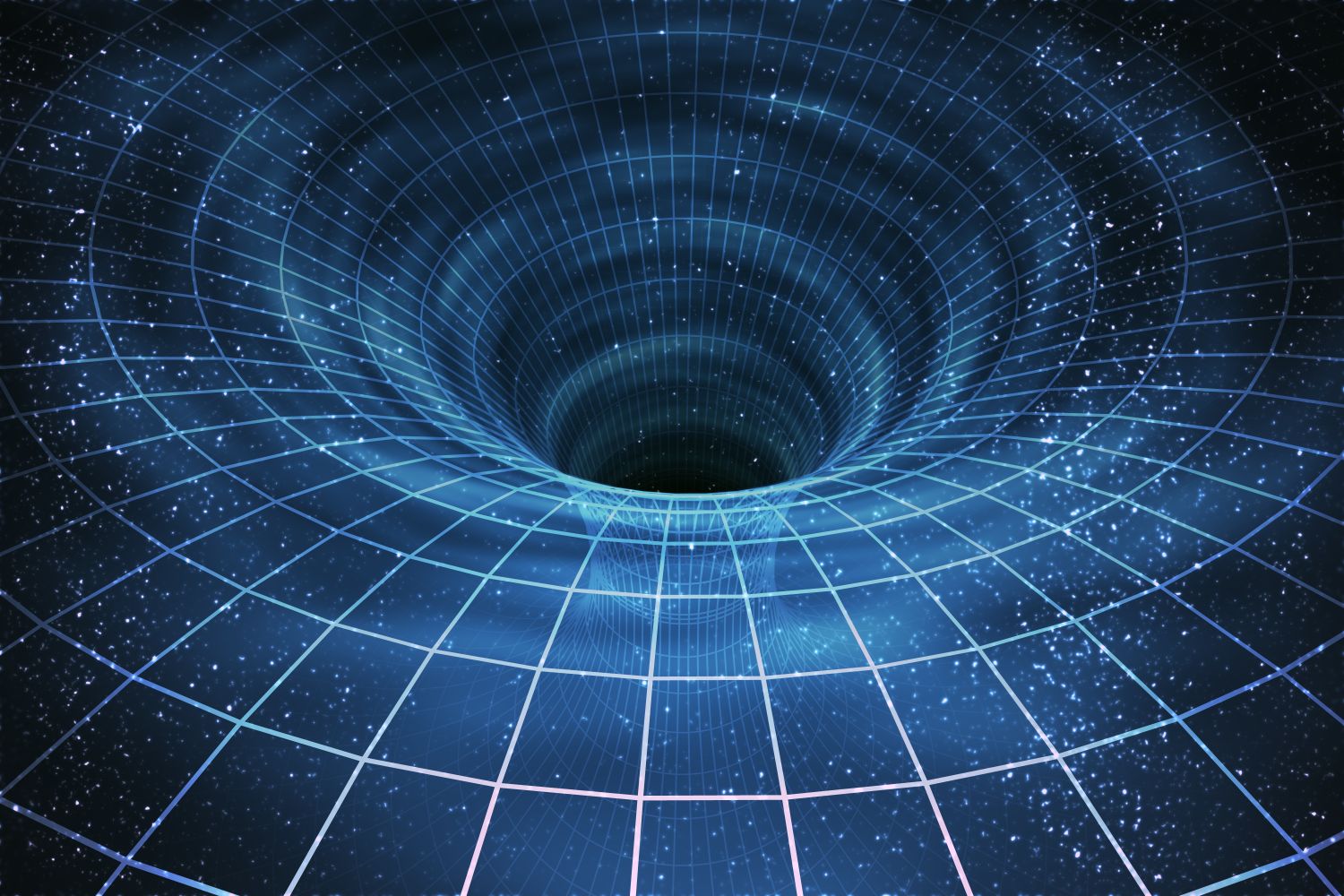
Exact Sciences: Astronomy and Space Physics
The Master’s Degree Programme in Exact Sciences: Astronomy and Space Physics at University of Turku encompasses a broad range of topics from the physics of the Sun and solar system to astrophysics of black holes and neutron stars and various astrophysical transients, as well as topics in galactic structure and evolution, and cosmology.
Duration
2 years
Starting Date
late August
Tuition Fee
EU/EEA countries or Switzerland: Free
non-EU/EEA: €12,000 per year
Location
Turku, Finland
About the programme
The Exact Sciences – Astronomy and Space Physics track from the University of Turku includes a solid grounding in theoretical aspects as well as providing opportunities for observational studies, e.g. of supernovae or accreting black holes. The space physics group performs experimental, theoretical, and computational research on high-energy phenomena in near-Earth space.
Upon graduation, you will be able to use the diverse set of skills acquired as part of this track, including computational and numerical techniques.
The Astronomy and Space Physics track is one of the six specialisation tracks of the Master´s Degree Programme in Exact Sciences. The other tracks of the programme are:
- Chemistry of Drug Development
- Chemistry of Materials for Sustainable Development
- Materials Physics
- Theoretical Physics
- Mathematics and Statistics
Programme Structure
The structure is modular. All modules have 20 ECTS. The track has two obligatory modules that contain the core material of the field. In addition, you may choose one thematic module from other modules offered within the MDP in Exact Sciences or other programmes at the University of Turku. The fourth module consists of freely chosen courses and an obligatory Finnish language and culture course.
A master’s thesis (30 ECTS), and seminar, an internship, or a project work (10 ECTS) are also required. You can replace the latter by participating in a Capstone project (15 ECTS) organised by the Department of Computing. We recommend this for those students who aim to work in the industry after graduation
Theoretical courses will cover aspects of plasma physics and astrophysics, radiative processes and cosmology, hydrodynamics and magnetohydrodynamics, astrophysical spectroscopy and interstellar medium, as well as stellar structure and evolution.
The methodology module covers observational techniques, data analysis methods, detectors, and numerical methods. Here, you will take courses in the methods of observational astrophysics, statistical and simulation methods, signal and image processing, time-series analysis and Fourier transforms, space technology and radiation and particle detectors.
You are free to choose the thematic module from those offered in the Faculty of Sciences or take a suitable minor subject, even one offered by other faculties. Thematic modules offered by the MDP in Exact Sciences include biomaterials, electronics materials, modelling and functional materials. Possible minor subjects are e.g. computer science, mathematics, chemistry, business creation and innovation. However, for the thematic module, specialised courses in astrophysics and space physics are highly recommended.
The specialised courses in astrophysics and space physics will give you a deeper understanding of e.g. active galactic nuclei, astroparticle physics, physics of planet formation, galaxies and cosmology, galactic astronomy, heliophysics and high-energy astrophysics as well as nuclear and particle physics. You can select the topics that support your master‘s thesis.
In the module of other studies, you can choose any courses you want from the entire offering of the University in addition to the obligatory course of Finnish for foreigners. It is recommended that you take more courses on computing, modelling and theoretical physics, depending on your preferences.
Career Prospects
The prospects for employment at relatively senior levels are excellent for those trained in the physical and chemical sciences. Thanks to the broad scope of the programme, the skills and knowledge developed as part of this education at the University of Turku provide many employment opportunities in different areas.
Many of our graduates choose to continue their education by pursuing PhD studies in Finland or other European countries (e.g., Belgium, Estonia, Germany and Norway). Others have obtained employment in the software and high-tech industries.
Career in Research
The Master’s degree makes you eligible for scientific postgraduate degree studies – doctoral and licentiate degrees. The University of Turku Graduate School (UTUGS) has a Doctoral Programme in Exact Sciences that covers all of the disciplines of this Master’s degree programme.
The doctoral studies incur no tuition fees, and PhD students often receive either a salary or a grant to cover their living expenses.
Other interesting programmes
-
-

BBA in Sustainable and Social Entrepreneurship
- Do you want to help organisations become more sustainable? Study to become a leader with an entrepreneurial mindset skilled in…
Do you want to help organisations become more sustainable? Study to become a leader with an entrepreneurial mindset skilled in driving positive social, environmental, and economic impact with the Sustainable and Social Entrepreneurship from University of Turku.
-
-
-

B.Sc.(Tech.) in Information and Communication Technology
- Do you want to be at the forefront of building information societies of the future? Study to become an expert…
Do you want to be at the forefront of building information societies of the future? Study to become an expert with the latest knowledge and skills in ICT with the Information and Communication Technology from University of Turku.
-
-
-

Public Mental Health
- Interested in becoming an expert in Public Mental Health? Gain the intellectual foundation and specialised skills you need to become…
Interested in becoming an expert in Public Mental Health? Gain the intellectual foundation and specialised skills you need to become an expert on mental health service systems, prevention and interventions for children, adolescents, and families.
-
-
-

Mechanical Engineering: Smart Systems
- The Master’s Degree Programme in Mechanical Engineering: Smart Systems of the University of Turku will enable you to design and…
The Master’s Degree Programme in Mechanical Engineering: Smart Systems of the University of Turku will enable you to design and develop cutting-edge smart technologies for a wide variety of applications and in various branches of industry.
-
-
-
Mechanical Engineering: Digital Manufacturing
- The Master’s Degree Programme in Mechanical Engineering: Digital Manufacturing of the University of Turku will train you to be an…
The Master’s Degree Programme in Mechanical Engineering: Digital Manufacturing of the University of Turku will train you to be an expert with thorough theoretical understanding and practical skills in next-generation 3D printing, other digital manufacturing, and traditional manufacturing technologies.
-
-
-
Mechanical Engineering: Digital Design
- The Master’s Degree Programme in Mechanical Engineering: Digital Design at the University of Turku will help you develop design thinking…
The Master’s Degree Programme in Mechanical Engineering: Digital Design at the University of Turku will help you develop design thinking to create and optimise products, services and systems with a human-oriented approach.
-
-
-

Materials Engineering: Modern Industrial Materials
- The Master’s Degree Programme in Materials Engineering: Modern Industrial Materials at the University of Turku trains professionals in materials engineering…
The Master’s Degree Programme in Materials Engineering: Modern Industrial Materials at the University of Turku trains professionals in materials engineering with a special focus in selecting and characterising materials for the needs of advanced industrial applications.
-
-
-
Materials Engineering: Materials of Energy Technology
- The Master’s Degree Programme in Materials Engineering: Materials of Energy Technology at the University of Turku trains professionals in materials…
The Master’s Degree Programme in Materials Engineering: Materials of Energy Technology at the University of Turku trains professionals in materials engineering with a special focus on energy materials.
-
-
-
Materials Engineering: Health Technology Materials
- The Master’s Degree Programme in Materials Engineering: Health Technology Materials at the University of Turku trains professionals in materials engineering…
The Master’s Degree Programme in Materials Engineering: Health Technology Materials at the University of Turku trains professionals in materials engineering with a particular focus on developing biomaterials to the needs of health technology applications.
-
-
-

Information and Communication Technology: Software Engineering
- The Master’s Degree Programme in Information and Communication Technology: Software Engineering at the University of Turku prepares you for a…
The Master’s Degree Programme in Information and Communication Technology: Software Engineering at the University of Turku prepares you for a full life cycle of demanding software systems, starting from their design and finishing with their implementation.
-
-
-

Information and Communication Technology: Robotics and Autonomous Systems
- The Master’s Degree Programme in Information and Communication Technology: Robotics and Autonomous Systems at the University of Turku provides a…
The Master’s Degree Programme in Information and Communication Technology: Robotics and Autonomous Systems at the University of Turku provides a competitive skillset in autonomous embedded systems based on Internet of Things (IoT). Main application areas of the researched systems are mobile robotic systems and smart environments.
-
-
-

Information and Communication Technology: Data Analytics
- The Master’s Degree Programme in Information and Communication Technology: Data Analytics at the University of Turku trains specialists for the…
The Master’s Degree Programme in Information and Communication Technology: Data Analytics at the University of Turku trains specialists for the effective use of data in research, decision-making, and society. The focus of teaching is on understanding and applying the operational principles of the key data analysis methods in practice.
-